

Feral Cat Stuff
Feral cats are domestic cats (Felis catus) that have reverted to a wild state, usually due to lack of human contact during their early life. They are the offspring of stray or abandoned cats and often live in colonies with little human interaction. Feral cats exist largely due to human negligence—when cats are abandoned or not spayed/neutered, they reproduce, leading to growing populations of feral cats.
Why Feral Cats Exist:
Feral cats are a result of uncontrolled breeding among unowned or stray cats. Unlike stray cats, which are accustomed to human interaction, feral cats are born outdoors and live independently of human care. Without early socialization (within the first few weeks of life), they develop a fear of humans and learn to survive by hunting or scavenging.
How Feral Cats Get Along with Each Other:
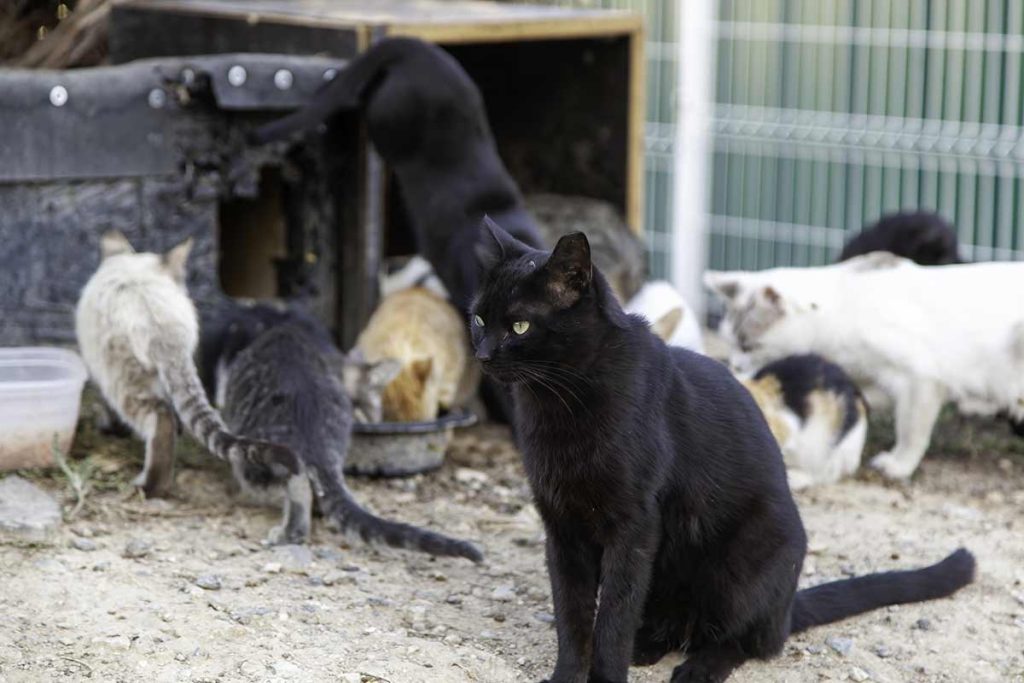
Feral cats typically live in colonies, often in proximity to a food source like a dumpster or feeding station. Within a colony, they can form social groups, usually made up of related cats. Female cats (queens) often cooperate in raising kittens and sharing resources. While males tend to be more solitary, they still interact with the colony for mating purposes or to challenge other males for dominance. Feral cats are territorial and will defend their area from intruders, but their interactions within the group are often more harmonious.
How Humans Help:
Humans primarily help feral cats through Trap-Neuter-Return (TNR) programs. In TNR, cats are humanely trapped, spayed or neutered, and then returned to their environment. This approach stabilizes and reduces the population over time by preventing further reproduction. Additionally, many people provide feeding stations, shelter, and medical care for feral cat colonies. Some friendly feral cats or young kittens can be socialized and adopted into homes, although it requires time and patience.
Feral Cat Behavior:
Feral cats are typically wary of humans and will hide or flee when approached. They are skilled hunters, relying on instinct and survival tactics to catch small prey such as birds, rodents, and insects. Their behaviors are often more defensive and wild compared to domesticated cats, and they tend to be active at night (nocturnal) to avoid human contact.
The Fine Line Between Wild and Domesticated:
The line between a feral cat being “wild” and “domesticated” is fluid. While many feral cats are untamable and thrive in outdoor environments, others—especially kittens—can be socialized with consistent human interaction. Early exposure to humans is critical to domestication. Some adult feral cats may never adapt fully to indoor life, but with patience, others can learn to trust humans and live peacefully in homes. Socialization windows for kittens, usually between 4 to 8 weeks of age, determine how comfortable they will be around people.
In summary, feral cats exist because of human actions, but they have adapted to survive and even thrive in the wild. Through humane efforts like TNR, humans are helping to manage these populations and reduce the challenges faced by these cats, while sometimes offering them a chance to re-enter domestic life.